If only...

Sunday, April 21, 2013

...that bastard with a bleached coxcomb hadn't looked me head to toe and sneered as we lined up in the field.

ㅅㅂ 새끼, 나도 나오기 귀찮았다고. 전혀 열심히 할 생각으로 나온건 아니었어, 근데...

I hadn't played soccer since the 6th grade, but damned if I was going to let a wet-behind-the-ears, musclebound shit look down on me just because I was the only double-X on the field.

네 이놈 오늘 나한테 제데로 걸렸다. 내가 여자가 얼마나 무서울 수 있는지 보여주마.

I wished I could have seen the look on his face an hour later, as I snatched the ball from under his nose and shot it straight into the goal.

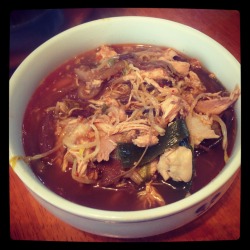
In Which I Discover a Great Time-Saver

Friday, April 19, 2013


My two favorite soups: bacon-lentil soup and Dakgyejang, Korean spicy chicken soup. I also love the mirepoix-based chicken soup a friend gave me the recipe to, but that usually disappears before I get an opportunity to photograph it.

I like to cook, almost more than I love to eat. I like the soothing and monotonous labor of chopping vegetables. I like the smells and the sizzle of the frying pan, watching pale dough rise and turn golden brown in the oven. I like the feeling of turning raw ingredients into something far greater than the sum of the parts. When I'm feeling blue, cooking almost always gets me in a better mood.

The trouble with cooking is that the sky is the limit.

The "Han" Question

Saturday, April 6, 2013

Excellent article by Gord Sellar about the supposed uniqueness of 정 in Korean culture, with a few mentions of 한 and 화병.

But as much as I liked the article, I found myself shaking my head its description of 한 (han), because to me "victimhood" was never not what 한 was, or at least, not the best way of summing up 한.

As I understand it, 한 is loss and sorrow, made all the more tragic because it is a sorrow so profound and so deeply existential that it can never be truly pacified. It is linked to the Animist tradition of seeing humans as mere vehicles for primal forces of longing and hate that transcend death, living on in nature, passed down through generations. It is also influenced by the Buddhist concepts of karma and the idea that peace can never be had until one fully renounces the world.


While this particular way of framing 한 may be culture-specific, stories of ghosts&#8212souls stuck in a limbo between life and death because of unfinished business, regrets, or vengeance&#8212are universal. And the canon of Western literature is positively lousy with stories of lasting grudges and sorrows tainting entire dynasties: Wuthering Heights, for one, and possibly the entire body of Faulkner's work.

So I have long been puzzled when Koreans assert that 한 is not just a word that stands for a culture-specific way of communicating an emotion that all cultures have an experience of, but a characteristic, even a defining one, of some collective Korean psyche.

Roundup of the Week: Part 2

Sunday, May 29, 2011

H. has got me hooked on Bubble Bobble, a really old game from the time computer screens were black. It's the classic beat-a-whole-obstacle-course-full-of-monsters-and-rescue-the-girl kind of scenario, except the heroes are a couple of bubble-blowing dinosaurs that make happy sounds as they bounce and eat cherries and cake and ice cream, with the mother of all ear worms playing in the background:


When—that is, if ever—we get the chance to live together, H. and I are going to beat all one hundred levels of this game, which he hears is near impossible to achieve without two players.


flashvars="hostname=cowbell.grooveshark.com&songIDs=70186&style=metal&p=0" allowScriptAccess="always" wmode="window" />

I've passed by 팔당호, just beyond the eastern tip of Seoul, several times without ever really knowing what it was. I'm usually returning from a backpacking trip in the rural areas—the kind that are more fun to reminisce about than to actually experience—on a bus creeping through traffic along 강변북로, following the Han River back to Seoul and to the corrosive glitter and ease of civilization. It's usually evening—sometimes very late in the evening—and I'm usually heavy-lidded, worn-out, and about ready for a shower and a nice soft bed. Weariness sometimes turns me introspective and even poetic, and the weird blue of the falling dusk, the dark shapes of the mountains looming like sleeping forms—often, in late spring or summer, shrouded in a thick mist off the water—and the broad, still, mirror-like river provides a good backdrop for the peculiar mood I am in.

Before the coming summer is out H. and I will have at least made plans to visit the place, instead of being content with a glimpse from the window of a bus speeding by. I imagine us standing side-by-side, watching the outline of the mountains dissolve and their shadowy forms seep into the deepening blue mist. Holding hands but off in our separate worlds, each of us thinking our own strange thoughts.

Roundup of the Week: Part 1


The weather is getting warmer, though at night breezes still raise the gooseflesh on bare arms. I first heard this song on a summer night, when I was lonely and depressed but did not regret having taken the leap to being single for what was perhaps the first time in my adult life. I'm not single anymore, which I regard as a bit of a mixed blessing, but weather like this still reminds me of that feeling, and of this song.


Teresa Teng was such a lovely lady, in the truest sense of the word. It was a shame she died so young.


This rabbit feeds Chuck Norris clover. In fact, I bet it not only pumps, but eats pure iron on a daily basis.

A Deceit of Lapwings

All happy people are more or less dissimilar; all unhappy people are more or less alike.